Nau mai: Introducing our Pou Tirohanga Māori Ben Matthews
We recently welcomed Ben Matthews to the Te Tumu Paeroa whānau as our new Pou Tirohanga Māori. We took some time to kōrero with Ben about his background, the values that guide his mahi, and his aspirations for the role.
Ko wai | About me
Nō Ngāpuhi, Ngāti Hine me Ngāti Porou tōku whaea, ā, nō Tauranga Moana tōku matua. I tipu ake ahau ki Te Karu o te Ika, ki Wairarapa, i raro i te marumaru me te manaaki o Ngāti Kahungunu me Rangitāne. Nō Te Whakatōhea, Ngāti Porou me Te Aitanga-a-Māhaki tōku hoa Rangatira. Tokotoru ā māua tamariki.
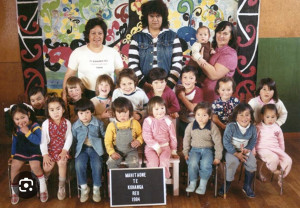
Ben is carried by his mother Paremo Matthews, as a new pēpī, born into the Kōhanga Reo movement in Wairarapa (back right).
I am the youngest of eight children, and being born in 1984 meant I was fortunate to be enrolled straight into kōhanga reo, which had been established only two years earlier. My four eldest siblings did not have that same opportunity, so I have always felt grateful to be part of the first kōhanga reo generation, a generation shaped by the vision, sacrifice, and determination of our nannies and kaumātua, who fought to revitalise our language, culture, and identity at a time when they were under serious threat.
So today, I try to carry that legacy forward with my own children through kōrero Māori at home, and by ensuring they also attend kōhanga reo and kura kaupapa Māori. I see that as my personal way of honouring the sacrifices of those who came before us, while helping ensure te reo Māori, tikanga, and identity remain a living taonga for future generations.
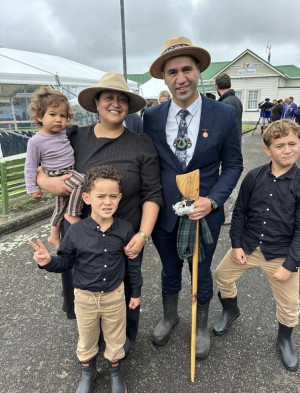
Ben and his pā harakeke.
I was drawn to Te Tumu Paeroa because kaupapa Māori is not peripheral to the mahi here, it sits at the centre of our mahi, which I find hugely refreshing. Tikanga, te reo Māori, whenua, and whānau aspirations are fundamental to the organisation’s purpose, and that felt like the right place for me to contribute the next stage of my career.
Hononga whenua | whenua connections
For me, whenua Māori is about whakapapa, mauri, identity, wairua, belonging, mana motuhake, responsibility, memory, sustenance, tūrangawaewae, and the enduring relationship between people, place, and future generations. When we understand whenua in that way, the question becomes not only how it is administered, but how it is cared for, protected, and used in ways that uphold its mana.
In recent decades, the growth of the Māori asset base and the return of whenua and taonga tuku iho through Treaty settlements has created important opportunities for iwi, hapū, whānau and Māori landowners. The challenge now is ensuring those assets are used in ways that reflect our values, strengthen our people, and protect the mana and mauri of the whenua, and I believe that decolonising our systems, policies and practices can help to get us where we need to go. Decolonisation, in this context, means restoring Māori ways of seeing, valuing, and relating to whenua. It asks us to look beyond economic or legal definitions and recognise whenua as a living source of identity, authority, obligation, and collective wellbeing.
Tikanga and te reo Māori are key. They strengthen connection to whenua because they help us understand place through an ao Māori lens. Te reo Māori carries names, stories, whakapapa and meaning, while tikanga guides how we honour and care for those relationships. This is also about making good mokopuna decisions, choices that meet the needs of today while protecting the mana and wellbeing of the whenua for those who will inherit it after us.
That idea of thinking generations ahead is not just professional for me, it is also deeply personal. My wife and I named our second son Te Ruki Kawiti, after the great Ngāti Hine rangatira and strategist. Kawiti is remembered not only for his remarkable military leadership and the ingenuity of his design of Ruapekapeka Pā during the Northern land wars, but also for what he stood for: the protection of rangatiratanga, whenua, whakapapa, and the mana of his people.
To me, his legacy speaks to courage, foresight, and the ability to think generations ahead. Naming our son after him was a way of acknowledging that inheritance, and the responsibility to carry forward the values of resilience, leadership, and commitment to people and place. A big responsibility some might say, but one we hope will remind him to stand with humility, strength, and a deep sense of obligation to his whakapapa and the generations who will follow.
That same intergenerational lens shapes how I think about the Pou Tirohanga Māori role and the contribution it can make across Te Tumu Paeroa.
Te tūranga | role & impact
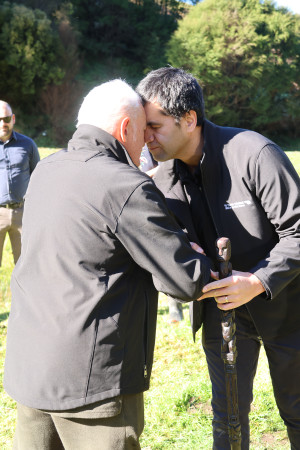
In practice, the role of Pou Tirohanga Māori provides leadership, policy and strategic advice to ensure Te Tumu Paeroa delivers on its Te Tiriti o Waitangi, te ao Māori and whenua Māori responsibilities. It supports senior leaders, strengthens culturally safe decision-making, uplifts the visibility of te reo Māori and tikanga Māori, and helps keep the organisation kaupapa Māori centred in its service to whenua Māori owners and whānau.
Embedding tikanga is important when working with whenua Māori because whenua is not simply a physical asset or economic resource. It carries whakapapa, mauri, identity, wairua, history, and obligations across generations, so our decisions need to honour those relationships and uphold the mana of landowners, whānau, and the whenua itself.
It is worth stating also that tikanga Māori and te reo Māori cannot be separated. Te reo Māori carries the concepts, histories, values, and ways of seeing the world that sit behind tikanga, while tikanga gives life and practice to the language.
Tikanga and te reo Māori add the most value where our mahi relies on trust, understanding, and good judgement. This includes engaging with mana whenua, supporting whānau and landowners, interpreting Māori concepts connected to whenua, recognising local kawa, and making decisions that are culturally safe and grounded in the realities of whenua Māori.
Taken together, this work is about helping Te Tumu Paeroa move from good intent to everyday practice, so te ao Māori is reflected not only in what we say, but in how we think, decide, and serve.
Whakakapi | Final words
To me, success looks like Te Tumu Paeroa being an organisation where te ao Māori is a natural and visible part of how we work with our communities across the motu, and with each other. It means our kaimahi have the confidence and capability to incorporate tikanga Māori, te reo Māori, and Te Tiriti-informed thinking into their everyday practice. I see success being when Māori perspectives are considered early in decision-making rather than retrospectively, and when our policies, services, systems and culture genuinely reflect the aspirations of the people and whenua we serve.
Ultimately, success is not measured by the number of initiatives delivered, but by meaningful changes in behaviour and outcomes.
I conclude with a whakatauākī attributed to Kīngi Tāwhiao, the second Māori monarch, who spoke of building his own house rather than relying on others to build it for him. For me, it speaks to rangatiratanga, resilience, and the responsibility we each have to strengthen our own foundations for the generations who follow.
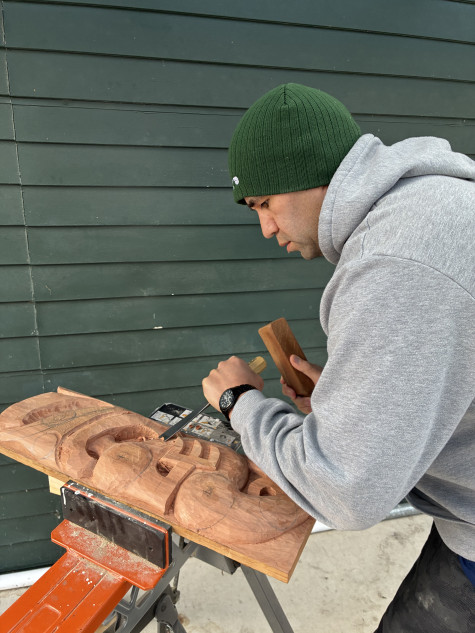
Having completed a whakairo course with Te Wānanga o Aotearoa, Ben enjoys mahi whakairo in his spare time.
Maaku anoo e hanga tooku nei whare
Ko ngaa pou oo roto he maahoe, he patatee
Ko te taahuhu, he hiinau
Me whakatupu ki te hua o te rengarenga
Me whakapakari ki te hua o te kawariki.
I shall fashion my own house
The support posts shall be of maahoe, patatee
The ridgepole of hiinau
The inhabitants shall be raised on rengarenga
Nurtured on kawariki.